Protein is arguably the most important macronutrient for body composition. It builds and repairs muscle, keeps you full longer than carbs or fat, supports immune function, and has the highest thermic effect of any macronutrient — meaning your body burns more calories digesting it. But how much do you actually need?
The Official Recommendation (and Why It's Insufficient)
The official RDA (Recommended Dietary Allowance) for protein is 0.8g per kg of bodyweight per day. For a 70 kg person, that's 56g — roughly two chicken breasts. But here's the catch: the RDA is designed to prevent deficiency in sedentary adults, not to optimise muscle mass, athletic performance, or fat loss.
For anyone who exercises, the evidence strongly supports much higher intakes.
Protein Recommendations by Goal
For muscle building
Research consistently shows that 1.6–2.2g per kg of bodyweight (0.73–1g per pound) maximises muscle protein synthesis. Going above 2.2g/kg provides no additional muscle-building benefit for most people, though it doesn't cause harm.
For fat loss
During a calorie deficit, higher protein intake — up to 2.0–2.4g/kg — helps preserve lean muscle mass. This is critical because losing muscle during a cut slows your metabolism and leaves you looking "skinny fat" rather than lean and toned.
For older adults (50+)
Muscle loss accelerates after 50 due to anabolic resistance — the muscle's reduced sensitivity to protein signals. Older adults benefit from 1.2–1.6g/kg even at maintenance, spread across meals to maximise uptake.
For sedentary adults
If you do little or no exercise, the RDA of 0.8g/kg is technically sufficient, but 1.0–1.2g/kg provides a comfortable buffer and supports satiety — making it easier to manage your weight.
There is no credible evidence that high protein intake harms healthy kidneys. The concern about kidney damage from protein applies only to people with pre-existing kidney disease — not healthy adults.
Spreading Protein Throughout the Day
Your muscles can only use roughly 30–40g of protein per meal for muscle protein synthesis. More than that doesn't go to waste — it's used for other functions — but spreading your intake evenly across 3–5 meals optimises muscle-building signals throughout the day.
A practical target: aim for 25–40g of protein per meal, starting with a protein-rich breakfast to break the overnight fast.
Best Protein Sources
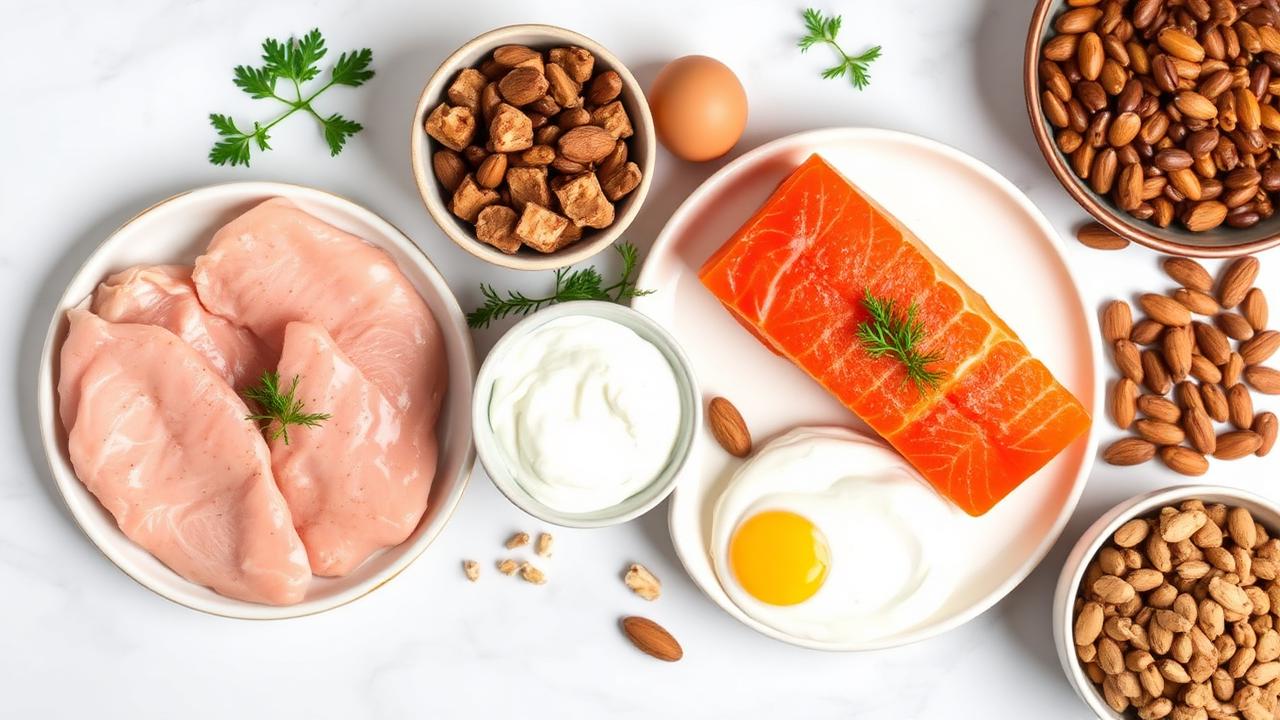
- Animal: Chicken breast (31g/100g), Greek yoghurt (10g/100g), eggs (13g/100g), salmon (25g/100g), cottage cheese (11g/100g)
- Plant-based: Lentils (9g/100g cooked), edamame (11g/100g), tofu (8g/100g), tempeh (19g/100g), black beans (8.9g/100g)
- Supplements: Whey protein (20–25g per scoop) — useful for convenience but not necessary if you hit targets through food
Plant proteins are typically less bioavailable and lower in essential amino acids than animal proteins. If you follow a plant-based diet, aim for the higher end of the protein range and combine diverse sources.
Calculate Your Protein Target
Enter your weight, activity level, and goal to get your personalised daily protein recommendation.
Open Protein Calculator →Protein Timing: Does It Matter?
The "anabolic window" — the idea that you must consume protein within 30 minutes of training — has been largely debunked. Total daily protein intake matters far more than timing. That said, consuming protein within 2 hours post-workout is still a sensible practice, especially if you train fasted.
The Bottom Line
If you're active, aim for at least 1.6g of protein per kg of bodyweight per day. Hit this target consistently through whole foods, use protein powder as a convenience tool if needed, and spread your intake across meals. That's it — no complicated protocols required.