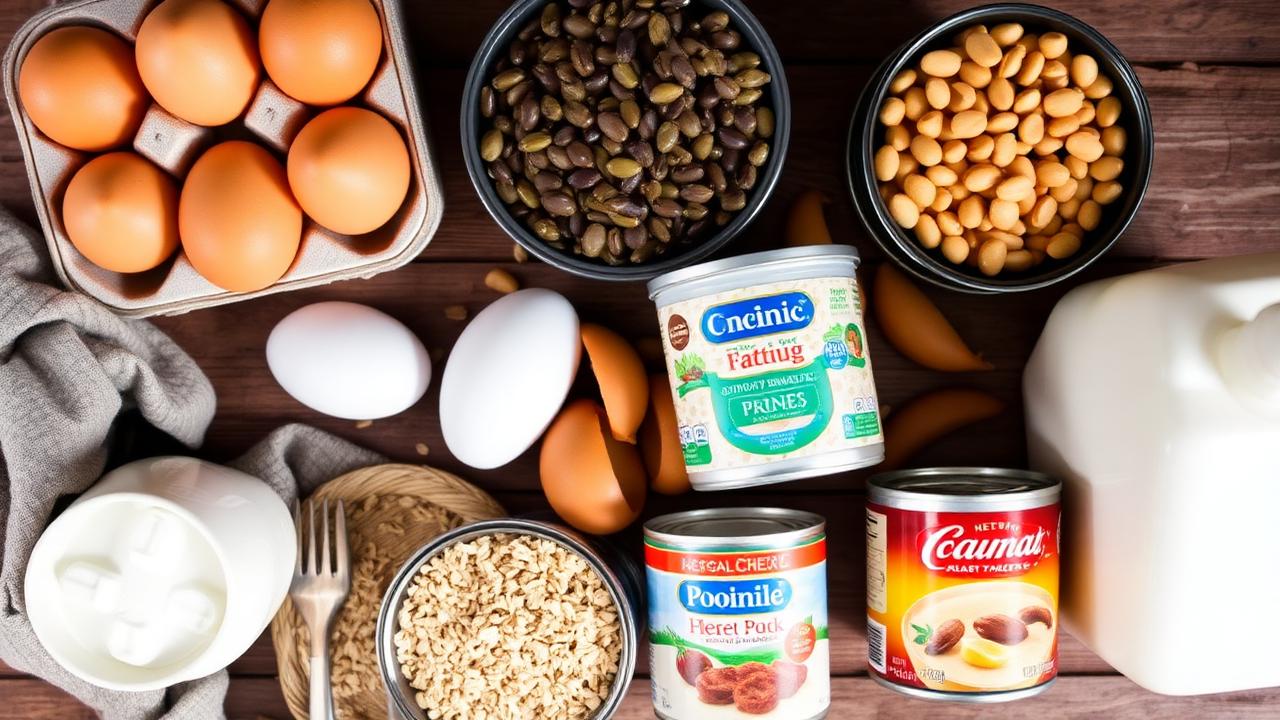
A common misconception is that building muscle requires expensive supplements, grass-fed beef, and premium protein powders. The truth is that some of the highest-quality, most bioavailable protein sources are among the cheapest foods available. Here's your complete guide to high-protein eating on a budget.
The Best Budget Protein Sources
Eggs (~$0.20 per egg, 6g protein each)
The gold standard of protein quality — eggs have a biological value of 100, meaning your body uses virtually all the protein they provide. They're cheap, versatile, and contain every essential amino acid. 3 whole eggs give you 18g of complete protein for under $0.70.
Canned Tuna (~$1.20 per can, 25g protein)
One of the highest protein-per-dollar foods available. Skipjack tuna is lower in mercury than albacore, making it safe for daily consumption. Excellent in pasta, salads, or straight from the can.
Chicken Thighs (~$3–4/kg, 26g protein per 100g)
Significantly cheaper than chicken breast with similar protein content. Slightly more fat, which also makes them harder to overcook — ideal for batch cooking. Bone-in, skin-on thighs are cheapest per kg.
Cottage Cheese (~$4/kg, 11g protein per 100g)
High in casein — a slow-digesting protein ideal before bed to sustain muscle protein synthesis overnight. Also rich in calcium and low in fat. Works as a savory side or blended into smoothies.
Lentils (~$2/kg dry, 18g protein per 100g cooked)
The best plant-based protein per dollar. Also extremely high in fibre (16g/cup), iron, and folate. Not a complete protein alone (low in methionine), but excellent combined with rice, eggs, or dairy.
Greek Yoghurt (~$4/kg, 10g protein per 100g)
Double the protein of regular yoghurt, high in calcium and probiotics. Buy unflavoured and add fruit — flavoured varieties are significantly more expensive and higher in sugar.
Frozen Fish (~$5–8/kg, 20–25g protein per 100g)
Frozen salmon, pollock, tilapia, and cod are much cheaper than fresh equivalents with identical nutritional value. Tilapia is the most affordable at ~$5/kg and still provides 26g protein per 100g serving.
Whey protein powder often seems expensive per tub but is actually very cost-competitive on a protein-per-gram basis ($0.03–0.05 per gram of protein). Use it as a supplement when whole food protein is inconvenient — not as your primary source.
Sample High-Protein Day on a Budget
- Breakfast: 3 scrambled eggs + 1 cup Greek yoghurt — ~40g protein, ~$1.50
- Lunch: Canned tuna with rice and vegetables — ~30g protein, ~$2.00
- Snack: Cottage cheese with fruit — ~20g protein, ~$0.80
- Dinner: Chicken thighs with lentils and rice — ~45g protein, ~$2.50
- Total: ~135g protein for ~$6.80
Tips for Budget Protein Eating
- Buy chicken, fish, and meat in bulk and freeze in portions
- Batch cook on Sundays — lentils, hard-boiled eggs, and grilled chicken last 4–5 days
- Use frozen vegetables — nutritionally identical to fresh at a fraction of the cost
- Buy store-brand Greek yoghurt and cottage cheese — identical to name brands
- Add eggs to any meal to boost protein affordably
Calculate Your Daily Protein Target
Find out exactly how much protein you need daily to maximise muscle building with our free protein calculator.
Open Protein Calculator →The Bottom Line
Hitting 150–200g of protein per day on a tight budget is entirely achievable with eggs, canned fish, chicken thighs, cottage cheese, Greek yoghurt, and lentils. Expensive supplements are optional — they're convenient but not required for excellent results.