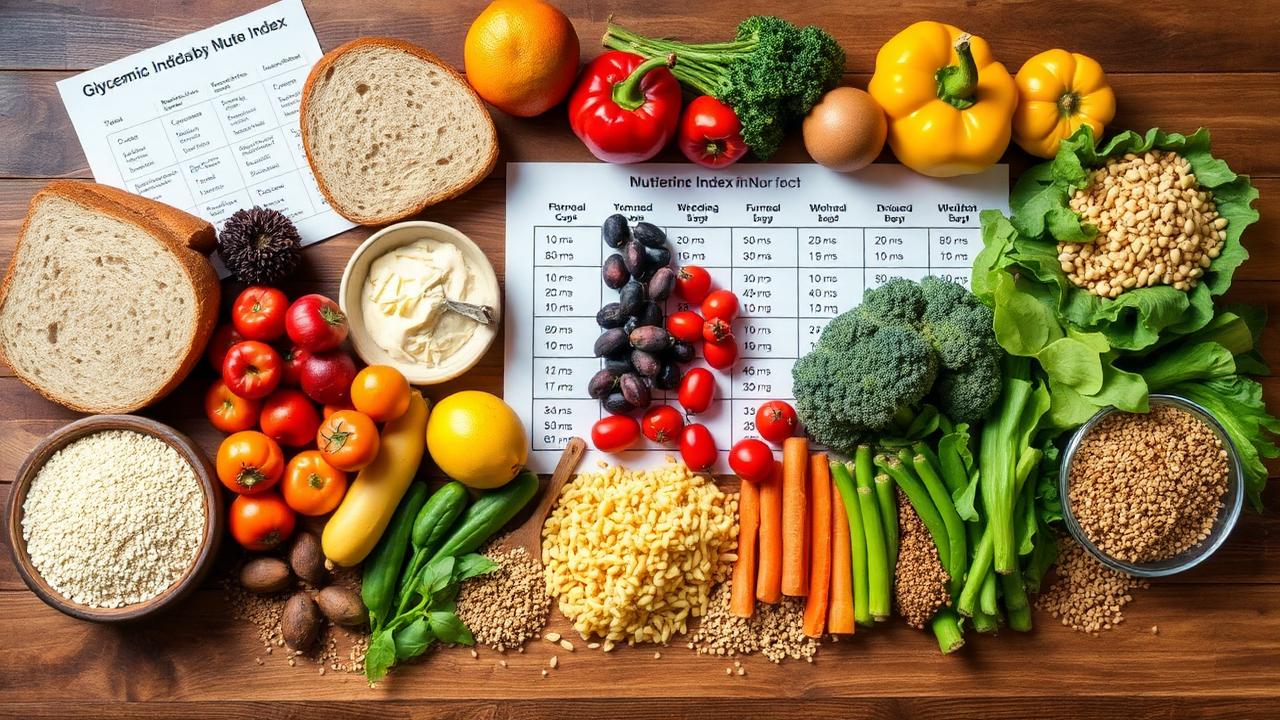
You've probably heard that white bread has a high glycemic index and you should eat brown rice instead. But does the glycemic index (GI) actually matter for weight management and health? The answer is more nuanced than most nutrition advice suggests — and glycemic load tells a more useful story.
What Is the Glycemic Index?
The glycemic index ranks carbohydrate-containing foods on a scale of 0–100 based on how quickly they raise blood glucose compared to pure glucose (GI = 100). Foods are classified as:
- Low GI (<55): Lentils (32), oats (55), sweet potato (54), apple (36)
- Medium GI (56–69): Brown rice (68), whole wheat bread (69)
- High GI (70+): White bread (75), white rice (73), watermelon (76), cornflakes (81)
The Problem with GI Alone
GI measures blood glucose response per 50g of carbohydrates — not per typical serving. This creates misleading results. Watermelon has a GI of 76 (high), but a typical serving contains so few carbs that its actual blood glucose impact is minimal. Carrots have a GI of 71, yet no one gets fat eating carrots.
Watermelon's GI of 76 led many dieters to avoid it — unnecessarily. Its glycemic load per typical serving is just 5 (low), because a standard piece of watermelon contains mostly water and only ~11g of carbohydrates. GI without GL is incomplete information.
Glycemic Load: The More Useful Metric
Glycemic Load (GL) accounts for both the GI of a food and the actual amount of carbohydrate in a typical serving:
GL = (GI × Carbohydrates in grams) / 100
- Low GL: <10
- Medium GL: 11–19
- High GL: >20
A meal's GL better predicts its real-world blood sugar impact than GI alone. Combine this with the fact that most people eat mixed meals (fat and protein slow glucose absorption), and GI becomes even less predictive of actual blood response.
When GI/GL Actually Matters
For most healthy people, GI is a minor variable. Where it becomes clinically relevant:
- Type 1 and 2 diabetes: Managing post-meal glucose spikes is essential
- Insulin resistance/prediabetes: Lower GL diets improve insulin sensitivity
- Athletes (carb timing): High-GI carbs post-workout accelerate glycogen replenishment
- Appetite management: Low-GL foods tend to produce more sustained satiety
A Practical Approach
Rather than obsessing over GI scores, apply these principles:
- Build meals around vegetables, legumes, and whole grains (naturally low GL)
- Pair higher-GI foods with protein, fat, and fibre to blunt blood sugar response
- Save high-GI carbs (white rice, white bread) for post-workout if you train hard
- Focus on total dietary pattern and calorie balance — far more important than GI for weight
Calculate Your Macro Targets
Build a carbohydrate strategy that works for your body and goals using our macro calculator.
Open Macro Calculator →The Bottom Line
GI is a useful but often misapplied concept. Glycemic load gives a more accurate picture. For most people, the simplest approach is: eat mostly whole foods, include plenty of fibre, and don't fear any single carbohydrate source in the context of an overall healthy diet.