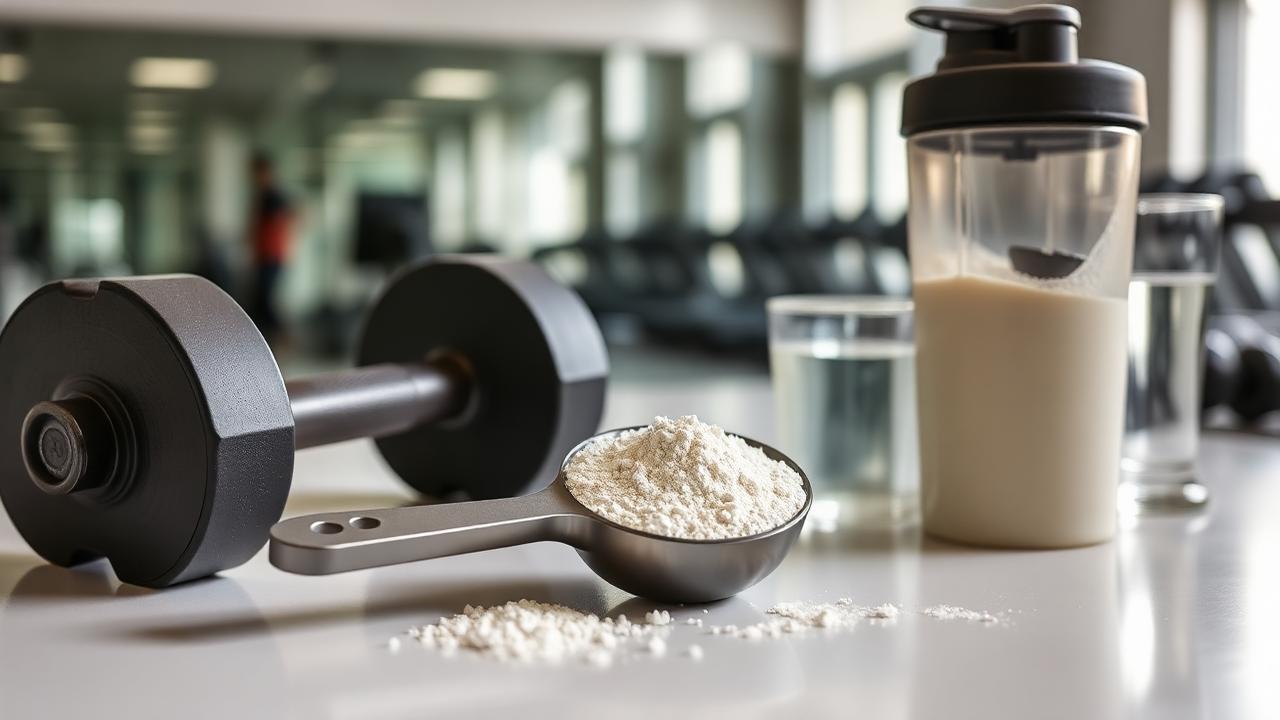
With hundreds of sports supplements on the market, most are backed by weak evidence and strong marketing. Creatine is the rare exception. With over 500 peer-reviewed studies supporting its safety and effectiveness, it is the most evidence-backed performance supplement in existence.
What Does Creatine Actually Do?
Creatine is stored in your muscles as phosphocreatine, which rapidly regenerates ATP — the energy currency used during high-intensity, short-duration efforts like sprinting, lifting, and jumping. By increasing your phosphocreatine stores, creatine allows you to perform more work before fatigue sets in.
This translates to:
- 2–5% increase in maximal strength over time
- Greater training volume (more reps, more sets)
- Faster recovery between sets
- 1–2 kg of additional lean mass over a training cycle (partly from increased muscle water content)
The Correct Dosage
Maintenance dose: 3–5g per day. This is sufficient to fully saturate your creatine stores within 3–4 weeks. Take it at any time — consistency matters far more than timing.
Loading phase (optional): 20g per day (split into 4×5g doses) for 5–7 days to saturate stores faster. Not necessary — the maintenance dose achieves the same result, just more slowly.
Creatine monohydrate is the best-studied, cheapest, and most effective form. "Kre-Alkalyn," "HCl," and other proprietary forms offer no proven advantage and cost significantly more.
Is Creatine Safe?
Yes — for healthy individuals. Studies up to 5 years in duration show no adverse effects on kidney or liver function in people with normal baseline health. The kidney-damage concern is a persistent myth originating from a single case report of a patient with pre-existing kidney disease.
Creatine does cause water retention (2–3 lbs) in the first 1–2 weeks, which is intramuscular, not subcutaneous — it doesn't cause bloating or a "puffy" appearance.
Who Benefits Most?
- Strength and power athletes: The clearest beneficiaries
- Vegetarians and vegans: Typically have lower baseline muscle creatine stores (creatine is found primarily in meat), so see larger gains
- Older adults: Creatine helps maintain muscle mass and may support cognitive function in aging populations
Calculate Your Protein Needs
Pair creatine with optimal protein intake. Use our free protein calculator to find your daily target.
Open Protein Calculator →The Bottom Line
Take 5g of creatine monohydrate daily. It's safe, cheap, and effective. If you strength train and you're not taking creatine, you're leaving a meaningful, well-documented performance and body composition benefit on the table.