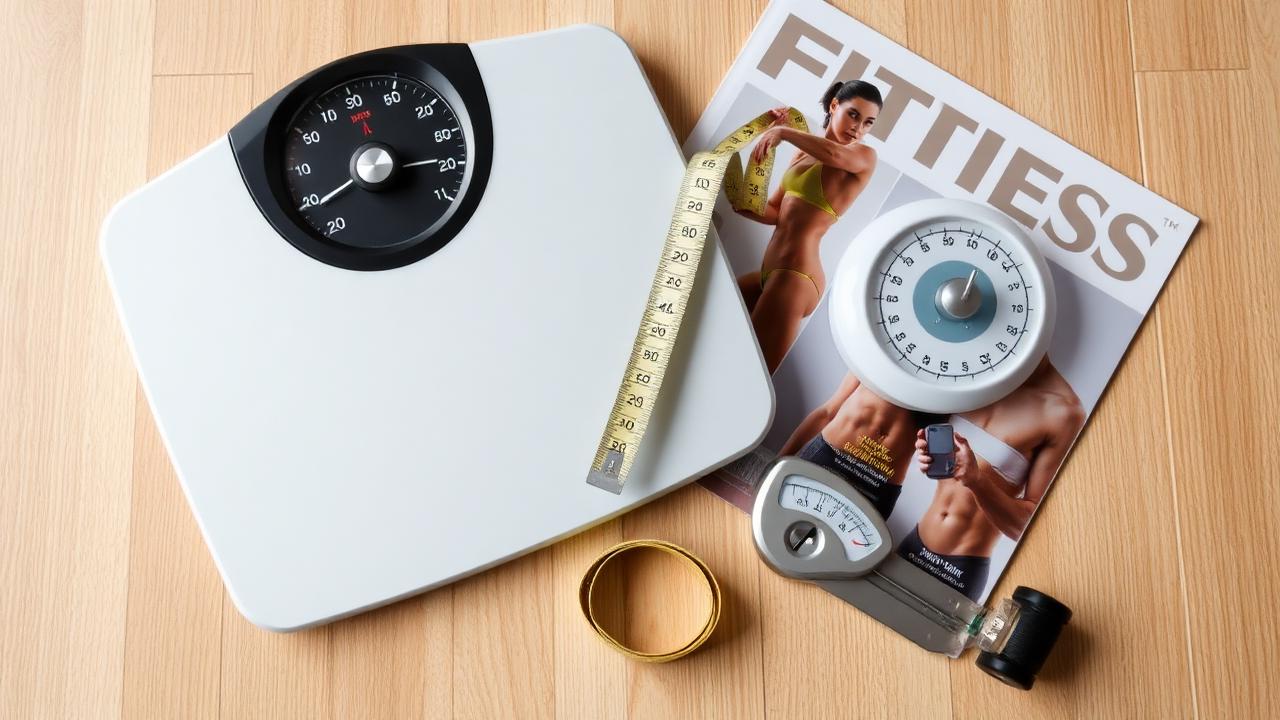
You've probably heard of BMI. It's been the standard health screening tool for decades and is still used by doctors worldwide. But body fat percentage tells a very different story — and for many people, it's the more meaningful number. So which should you track?
What BMI Measures
Body Mass Index (BMI) is a simple ratio of your weight to your height squared: BMI = weight (kg) ÷ height² (m²). It places you in one of four categories: underweight (<18.5), normal (18.5–24.9), overweight (25–29.9), or obese (≥30).
It's fast, free, and requires no special equipment — which is why it's still widely used. But it has serious limitations.
Why BMI Falls Short
BMI cannot distinguish between fat mass and muscle mass. A competitive bodybuilder might have a BMI of 30 (classified as "obese") while carrying only 10% body fat. Conversely, someone with a "normal" BMI of 23 might carry 35% body fat — a condition called normal-weight obesity or being "skinny fat".
Research consistently shows that body composition is a stronger predictor of metabolic health, cardiovascular risk, and longevity than BMI alone.
BMI is a population-level screening tool — useful for spotting trends in large groups, but it misclassifies up to 30% of individuals when used alone.
What Body Fat Percentage Measures
Body fat percentage directly measures the proportion of your weight that is fat tissue versus lean mass (muscle, bone, organs, water). Healthy ranges are:
- Men: 10–20% (athletic: 6–13%, essential: 2–5%)
- Women: 18–28% (athletic: 14–20%, essential: 10–13%)
These ranges account for the fact that women naturally carry more essential fat for hormonal and reproductive functions.
How to Measure Body Fat
Methods range in accuracy and accessibility:
- DEXA scan: Gold standard (±1–2%), but expensive and not widely available
- Hydrostatic weighing: Very accurate, but requires submersion in water
- Skinfold calipers: Good accuracy (±3–4%) if done by a trained professional
- Bioelectrical impedance (BIA): Consumer scales and handheld devices (±3–5%), convenient but affected by hydration
- Navy method formula: Uses neck, waist, and hip measurements — surprisingly accurate (±3%)
Calculate Your Body Fat Percentage
Use our free body fat calculator — no equipment needed, just a tape measure.
Open Body Fat Calculator →When to Use Each Metric
Use BMI when: you want a quick, no-equipment health snapshot or are tracking population-level trends. It's a reasonable starting point.
Use body fat percentage when: you're actively training, have a lot of muscle mass, want to track fitness progress, or need a more accurate picture of your metabolic health risk.
Ideally, track both. A normal BMI combined with a healthy body fat percentage is a strong signal of good metabolic health. Any mismatch between the two is worth investigating further with a healthcare provider.
The Bottom Line
BMI is a blunt tool — useful for a quick check but limited in precision. Body fat percentage gives you a clearer, more actionable picture of your health and fitness. If you're serious about your body composition goals, tracking body fat percentage over time will serve you far better than watching the scale or checking your BMI category.